
I pulled the silver pocket watch out of my canvas utility vest pocket while waiting at the red light on Elm Street. The brass latch on the watch was worn down to a dull copper color where my father’s thumb had rested during church services thirty years ago. It was exactly four in the afternoon when I clicked the latch shut and slid the watch back into my pocket.
The cab of my truck smelled of freshly cut pine sawdust and cold coffee. I had spent the last six hours supervising the framing crew on the new medical center downtown, and my heavy leather boots were still coated in white dust from the drywall sheets we had unloaded.
I reached across the vinyl bench seat to touch the metal handle of my steel toolbox, but my fingers hit only the cold, cracked material of the passenger seat.
I had left the box on the main work table back at the construction site. It contained my grandfather’s brass plumb bob, two specialized wood chisels, and three antique hand planes that I never liked leaving overnight on an unsecured job.
I looked at the dashboard clock, which read five past four. The late autumn sun was already low over the Oakhaven hills, casting long, gray shadows across the gravel lots and the bare maple trees along the road.
I decided the tools would have to wait until morning. Leo was scheduled to get off the school bus at three-thirty, and Ruth was waiting for him at the house.
Ruth, my late wife’s mother, had been living in our spare bedroom for three weeks. She was sixty-four and had a high-pitched, formal way of speaking that made the neighbors quiet down on their porches when she walked past.
She had offered to help with Leo after my wife passed, and I had been grateful for the company in the quiet house. I believed she was just a loving grandmother, perhaps a bit old-fashioned in her expectations of an eight-year-old boy, but deeply committed to his welfare.
She kept the kitchen floor swept, prepared hot meals every evening, and made sure Leo had his blue drawing pad ready when he sat down to do his homework at the pine table.
The blue drawing pad had cost four dollars at the Oakhaven pharmacy downtown. Leo used it to draw small, detailed pictures of beetles, dry oak leaves, and the wooden legs of the kitchen table instead of talking.
I turned the truck down our street, the dry maple leaves scraping against the wheel wells with a sound like paper bags tearing.
I parked the truck in the gravel driveway beside the porch. The ranch-style house looked quiet under the gray sky, the white siding dull in the autumn light.
I walked up the side steps and reached for the kitchen door. A cold draft was blowing from under the wooden frame, smelling of wet earth and dry grass.
I stepped inside and set my truck keys on the laminate counter. The kitchen was cold, much colder than usual for a November afternoon.
The heavy oak chair that usually sat by the phone was lying on its side on the linoleum floor.
A glass of water had spilled near the legs of the overturned chair, the puddle soaking into the seam of the flooring.
I stood by the sink and listened. The house was silent, but it was a heavy silence that felt thick in the small room.
Then I heard a dry, rhythmic scraping noise from the front living room. It sounded like a piece of dry wood dragging across a wool rug.
“Ruth?” I called out.
Nobody answered. I walked toward the hallway, my heavy wool socks silent on the pine floorboards.
The living room was dark, the heavy green drapes pulled shut against the street.
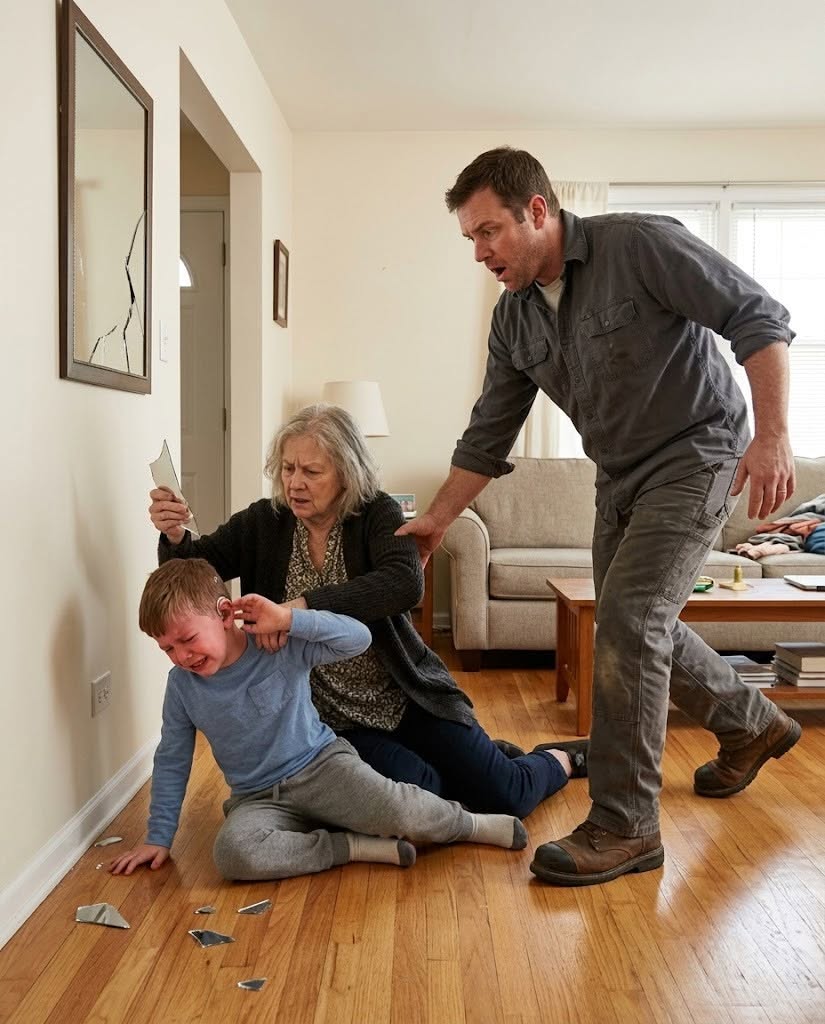
Ruth was kneeling in the middle of the floor. She wore her brown wool cardigan, buttoned all the way to her collar, and her back was perfectly straight.
She was leaning her weight forward, her knee pressed down on the carpet.


